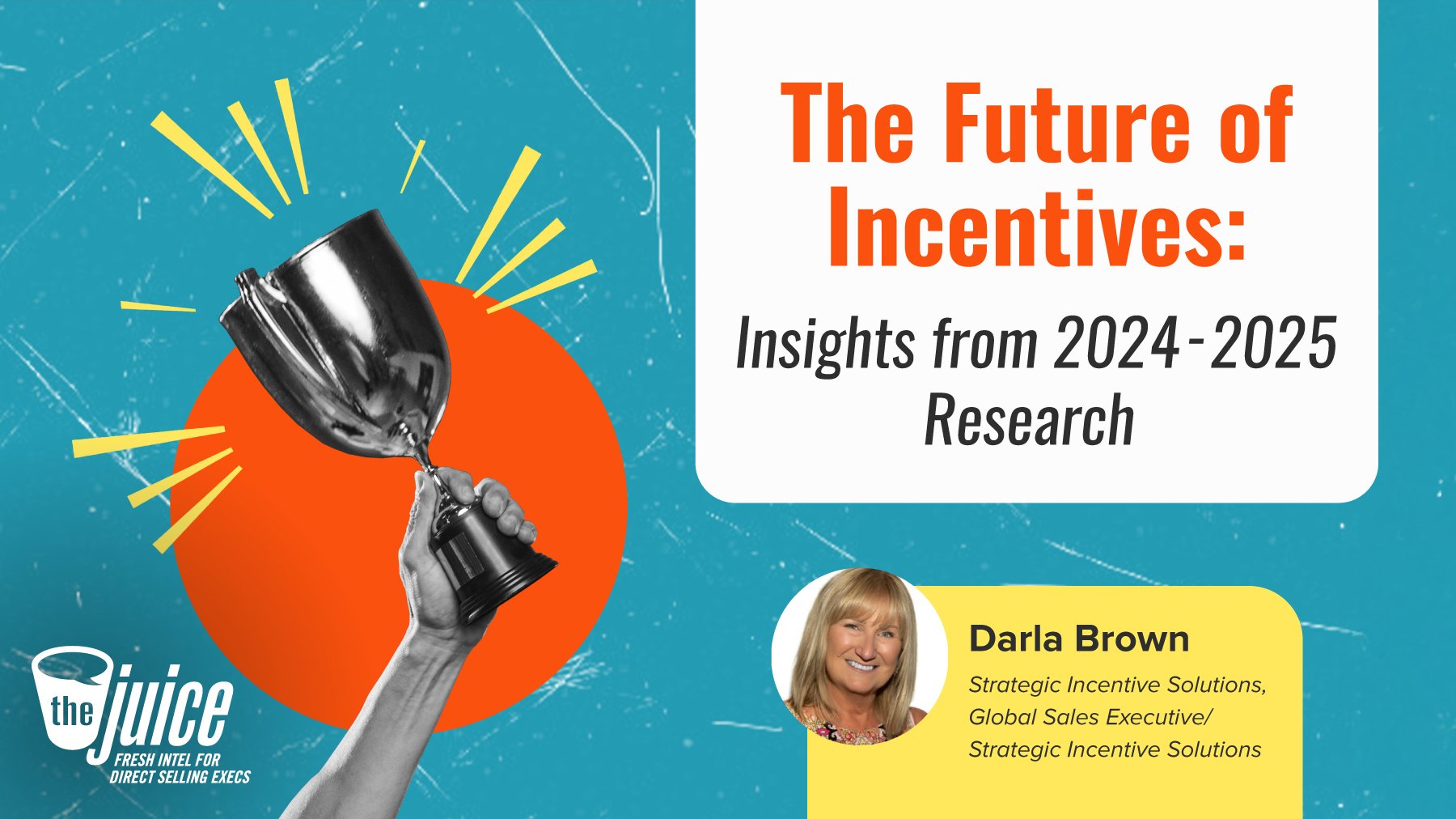
The Future of Incentives: Insights from 2024–2025 Research
The incentive industry is experiencing one of its most transformative moments in decades. Once seen primarily as a way to push short-term sales or recognize top achievers, incentives are now becoming a strategic lever for growth, engagement and culture-building.
Recent research from the Incentive Research Foundation (IRF) and the Incentive Marketing Association (IMA), published throughout 2024 and 2025, shines a spotlight on how organizations worldwide are reimagining rewards in response to new workforce demographics, economic pressures and advances in technology.
This article unpacks the most important findings from these reports and explores what they mean for organizations, especially in the direct sales and channel incentive space, where performance, recognition and loyalty intersect.
1. The Expanding Reach of Incentives
Historically, incentive programs were narrow in focus: reward your top 5% of performers with travel, merchandise or a bonus, and the rest of the organization would strive to reach that bar. That model still exists, but the IRF 2025 Trends Report highlights a significant shift: incentives are becoming more inclusive and culture-driven.
Instead of concentrating all resources on elite performers, companies are broadening recognition to mid-tier contributors, new recruits and support teams who influence results indirectly. This is particularly true in direct sales, where the majority of growth often comes not from top sellers alone, but from the “middle 60%” who need motivation, recognition and confidence to progress.
Points-based systems are enabling this inclusivity, allowing more participants to earn incremental recognition.
Gift cards and merchandise continue to be popular because they offer flexibility, immediacy and relatability across demographics.
Experiential rewards, from virtual masterclasses to group travel, help foster belonging and connection across diverse teams.
The shift toward inclusivity isn’t just about fairness; it’s about economics.
Broadening reward eligibility ensures more people are emotionally invested in the program, leading to higher engagement, retention and cultural alignment.
2. Incentives Under Economic Pressure
Inflation has been a recurring headline since 2021, and its effects ripple through incentive design. The IRF Industry Outlook for 2025 and IMA’s 2025 Global Insights both emphasize the budgetary balancing act companies now face.
Rising costs of travel, merchandise and shipping have forced organizations to reconsider the mix of their rewards portfolio.
Many programs are adjusting fixed-dollar values upward by 20–25% to preserve motivational impact. A $100 gift card today simply doesn’t carry the same perceived value as it did three years ago.
Organizations are scrutinizing the ROI of travel and events, prioritizing high-impact group experiences or scaled-down but still aspirational offerings like short cruises.
Incentive managers are becoming more financially savvy, shifting budgets to areas where rewards will resonate most without overextending resources. This requires constant measurement and, increasingly, the use of analytics and AI to fine-tune reward portfolios in real time.
For direct sales companies, this means carefully balancing aspirational trips and recognition events with everyday accessible rewards like points, digital gift cards and branded merchandise.
3. The Power of Incentive Design
One of the most important findings from IRF research over the past decade is that design matters. Poorly structured programs don’t just underperform—they can actively demotivate.
The IRF’s performance studies (cited again in 2025) show:
Non-cash incentives can increase individual performance by ~22%.
Team-based incentives can boost collective results by up to 44%.
However, the structure of the program is key. Open, quota-based models, where everyone can achieve, significantly outperform closed “tournament” models, where only the top 5–10% win.
In direct sales, this translates to:
Tiered recognition ladders that allow participants to celebrate small wins (first recruit, first sales milestone, first promotion).
Progressive advancement systems that reward both incremental and breakthrough achievements.
Avoiding “winner-takes-all” contests that alienate the majority of the sales force.
Incentive design is evolving toward journey-based recognition, where sellers are motivated not just by a destination (the trip or award) but by continuous milestones along the way.
4. Generational Expectations and Global Shifts
The IMA Incentive & Recognition Insights 2025 highlights the growing influence of Gen Z and Millennials in shaping program design. Their expectations differ from previous generations in several important ways:
They value flexibility and personalization, preferring digital gift cards, on-demand experiences and lifestyle rewards over rigid merchandise catalogs.
They respond to immediacy—rewards that arrive quickly after achievement rather than months later.
They are more likely to share their rewards socially, amplifying the visibility and employer branding of incentive programs.
Global data adds another layer. While preferences differ across regions—Europe leans toward sustainability in rewards, North America emphasizes digital convenience, and Asia Pacific often prefers branded merchandise—the universal theme is personalization and choice.
For direct sales companies operating across borders, the lesson is clear: a one-size-fits-all incentive program is outdated. Rewards must be curated not only by performance tier, but also by generation, geography and cultural context.
5. Technology, Data and AI: The New Backbone
If inclusivity is the heart of modern incentives, technology is the backbone. Both IRF and IMA emphasize the increasing role of integrated tech platforms, APIs and AI in powering incentive programs.
CRM integration (e.g., Salesforce) ensures that sales data feeds directly into incentive tracking, reducing admin work and improving transparency.
Learning management systems (LMS) are tied to reward programs, so reps earn recognition for completing training, certifications or product education.
AI and BI tools analyze participation patterns, identifying at-risk performers or underperforming product lines, then triggering bonus point campaigns or spot rewards.
A growing trend is the “connected stack” approach: linking partner portals, incentive management systems and analytics into a seamless participant experience.
For direct sales, this is a major opportunity. Imagine a system where:
A new recruit automatically earns onboarding rewards as they complete training modules.
Mid-performers are nudged with personalized bonus offers based on their current rank.
Leaders receive dashboards showing team progress, helping them coach and motivate effectively.
Technology doesn’t just streamline … it personalizes, scales and makes programs more dynamic.
6. The Human-Centric Incentive Movement
The strongest undercurrent across all 2024–2025 research is the human-centric design of incentives. While technology enables scale, organizations are doubling down on the emotional side of motivation:
Belonging and culture are now core objectives of incentive programs. It’s not just about driving sales, but about reinforcing values, identity and loyalty.
Experiential rewards like team travel, wellness retreats and cultural experiences are valued not just for the reward itself, but for the shared memories and connections they create.
Recognition moments matter. Even small acknowledgments, when personalized and timely, carry weight in a world where employees and independent reps seek validation and purpose.
This is particularly powerful in direct sales, which thrives on community. Programs that combine tangible rewards with recognition rituals—leaderboards, social shoutouts, milestone badges—create both external motivation and internal belonging.
7. Practical Applications for Direct Sales
Pulling the threads together, here are some concrete takeaways for direct sales incentive design in 2025:
Tiered recognition ladders: Reward early steps as well as top performance to motivate the broadest base.
Mix of aspirational and accessible rewards: Balance trips and high-value prizes with points and gift cards that more people can earn.
Onboarding & training incentives: Encourage retention by rewarding certifications, learning modules and mentoring.
Inflation-aware budgeting: Adjust fixed reward values and diversify formats to maintain motivational impact.
Generational alignment: Offer digital, flexible and shareable rewards that resonate with younger participants.
Global sensitivity: Adapt catalogs and experiences to regional norms and sustainability values.
AI-driven personalization: Use data to target mid-performers, dynamically adjust campaigns and deliver timely recognition.
8. Executive Summary: Incentives in 2025 and Beyond
The research is clear: incentives are no longer just about pushing sales numbers—they’re about building culture, driving engagement and creating loyalty at scale.
The IRF shows us the importance of inclusive, well-designed and economically balanced programs. The IMA highlights global perspectives, generational shifts and the rise of personalization. Together, they point toward an incentive future that is flexible, tech-enabled and deeply human.
For direct sales organizations, this is both a challenge and an opportunity. By embracing inclusivity, balancing budgets wisely and leveraging technology, they can create incentive programs that do more than reward performance—they can transform communities, empower people and build lasting growth.
Bottom Line → The organizations that succeed in 2025 and beyond will be those that understand this simple truth: incentives are imperative and are a strategic engine for business growth and human connection.
References:
Other Articles You May Enjoy