Why Most Direct Selling Websites Fail (and what WE-COMMERCE can do about it)
As e-commerce exploded, the direct selling industry panicked. Companies split in two directions: stick with traditional reps or go all-in online.
As if you had to choose. As if these were opposing forces. As if the internet somehow made human connection obsolete.
So now we have a mess. Reps don't trust corporate websites because they can’t ensure the sale. Meanwhile, corporate teams build e-commerce strategies completely disconnected from their field, competing with their own people and alienating their greatest asset: passionate advocates who actually use and love the products.
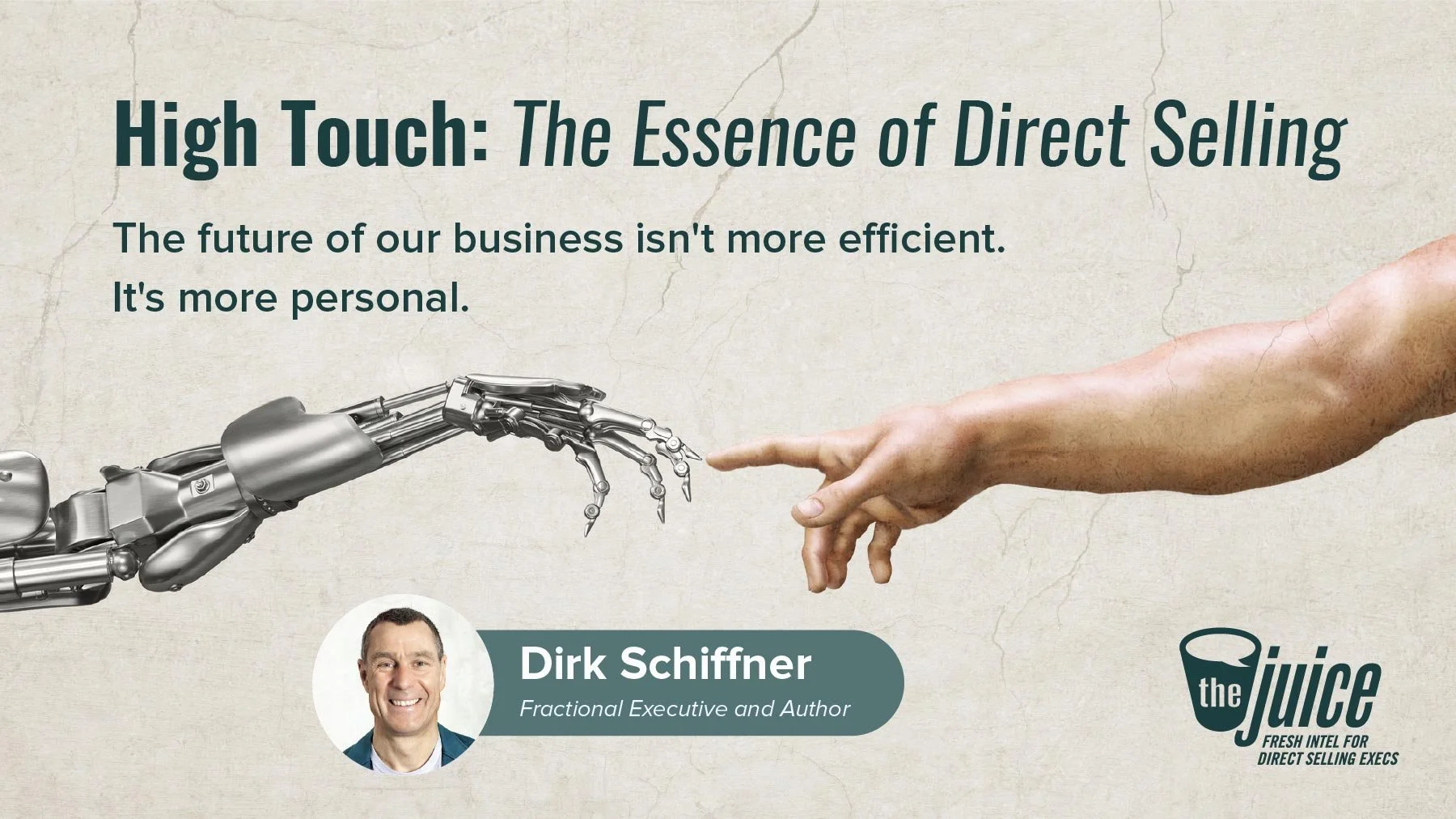
But here's the thing… people buy from people. Always have. Always will.
That moment when a friend says, "This changed everything for me,” that's magic. That's human and real.
And the smartest companies in direct selling are figuring out they don't have to abandon this magic for digital success. Welcome to WE-COMMERCE™, where the power of human connection meets conversion-optimized digital experiences.
Why Most Direct Selling Websites Fail
Let's be honest about what's happening. Customers hear an authentic, enthusiastic recommendation from someone they trust… then land on a website that looks like it was built in 2005. The disconnect is jarring, and the sale is lost.
Meanwhile, pure e-commerce companies desperately try to manufacture what direct selling companies already have: authentic advocates sharing products they genuinely love. The irony is stunning. We're sitting on gold and treating it like dirt.
The WE-COMMERCE™ Revolution: A Few Game-Changing Strategies
1. Leverage Authentic Field Content into Conversion Gold
Those authentic posts your field shares daily? That’s not just social media noise. That's your conversion goldmine. Regular e-commerce brands spend millions trying to manufacture authenticity, while you have hundreds of people creating real content about your products every single day.
Your customers understand that you want a pretty brand image, but they can also smell inauthenticity from a mile away.
How they connect with your brand is through a real person's experience. Collect field social posts and feature them everywhere: homepage, product pages, email flows and checkout pages. When someone sees another real human loving your product, they want in.
But don't stop at visual content. Modern buyers have one burning question: "Did this work for people like me?" Your field's experiences answer that question better than your best copywriting ever could. Five stars from real people outperforms corporate marketing copy every single time.
Short on reviews? You have an army of passionate users: your reps. Start there. Get their authentic experiences on the page. Transform their social posts into testimonials, their before-and-after photos into proof points, and their success stories into conversion drivers. No authentic social proof equals no trust, which equals no sales.
2. Design Product Pages That Actually Sell
Your product pages should be conversion machines, not information dumps.
When a rep shares a product link, that page needs to do all the selling with a clear path:
Problem → Solution → Proof → Purchase
Top direct-to-consumer brands know this secret: each product page is a complete sales argument. Nothing missing, nothing extra. Studies show people scroll an average of 5X further on product pages than anywhere else on your site, so don't hold back. Every piece of evidence that makes the sale in person should be right there on the page.
Lead with benefits at the top ("Sleep better tonight" beats "Contains 2.5mg of melatonin" every time), then support with science at the bottom. Nobody buys ingredients; they buy solutions.
3. Eliminate Friction Everywhere It Matters
Nobody has time for checkout marathons anymore. Hook up Apple Pay, PayPal, Shop Pay and buy-now-pay-later options so customers can complete purchases in seconds.
Every extra click costs you money.
But here's where it gets tricky in direct selling: keep your checkout clean from industry jargon. No CV/QV/PV terminology visible to customers. No complicated compensation explanations. Create a shopping flow that looks and feels like mainstream retail, something influencers would be proud to share with their audience.
4. Optimize for the First Three Seconds
Everything critical to conversion needs to be visible the instant your page loads. You have three seconds or less to convince visitors to scroll. If they can't immediately see what's in it for them, they're gone.
Focus ruthlessly on above-the-fold content. Anything a customer can see before they start scrolling is critical to your sale. Squeeze those margins if needed. Cut the fluff. Make those first screen inches count. The best site in the world doesn't matter if nobody sticks around to see it.
5. Build Trust Through Transparent Attribution
Here's where most companies mess up: attribution tracking.
Your reps need bulletproof systems that show exactly where leads come from and who gets credited for what.
When reps see transparent attribution data, they stop worrying about the company "stealing" their customers and start sharing more links. Trust issues kill sales. Good tracking creates happy field teams, which creates more sales. It's that simple.
6. Create Unified Digital Experiences
Stop making your reps jump between a dozen different tools. Merge your sharing and buying experience into one seamless flow. When a rep spots the perfect opportunity to recommend something, they should be able to grab it, personalize it and send it in seconds, with buying just one tap away.
The most successful companies are also connecting rep tools directly to their commerce platform so field members can see exactly what's happening with their customers. When someone watches a video, abandons a cart or lingers on a product page, your field should know. Armed with real-time data, reps can follow up at the perfect moment.
7. Connect Customers Directly to a Trusted Person
Here's your competitive advantage that pure e-commerce companies can't replicate: genuine human connection. They're throwing money at influencer marketing and paid reviews, desperately trying to manufacture what you already have naturally.
Don't waste this advantage by routing customer service chats to corporate agents. Send them straight to the rep who shared the link. Your field is eager to help their contacts make the right choice and close those sales personally. Nothing converts like a real human conversation with someone who genuinely cares about the customer.
Live chat can boost checkout conversions by up to 20%, and that number skyrockets when handled by people who actually know and care about the customer. Make it easy for customers to connect with the human who recommended the product in the first place.
8. Optimize Your Technical Foundation for Speed and Agility
All of your other strategies fall apart if your site is slow or inflexible. Run Google Lighthouse checks regularly. This free diagnostic tool measures your site's performance with simple color-coded scores that directly predict your conversion rates. When pages load in a blink, sales soar. Each extra second of load time sends impatient shoppers running to competitors.
But speed involves more than just technical performance. You need marketing-controlled systems where you can test and optimize on the fly. Conversion marketing is never "done." Set up your infrastructure so you can make changes quickly without waiting for developer approval. By the time your competitors get that developer request approved, you should have already made five profitable updates.
Why This Matters Now More Than Ever
The direct selling industry is at a crossroads. Companies that figure out how to blend human authenticity with digital conversion science are going to dominate. Those that don't will watch their best reps migrate to companies that actually support their success.
At Fluid, we've seen this transformation firsthand. Companies implementing true WE-COMMERCE™ strategies are dominating their markets by blending human authenticity with digital conversion science. Why? Because they have something Amazon can't buy: genuine human advocates who actually use and love the products they're sharing.
The future doesn't require choosing between your field and digital platforms. It's about creating beautiful synergy where both make each other better. Your reps become digital advocates equipped with tools that track their influence. Your corporate team builds websites and tools that actually sell. Your customers get the best of both worlds: trusted recommendations that lead to seamless experiences.
Getting Started
The transformation doesn't happen overnight, but it doesn't have to take years either. Start by auditing your current digital experience through the eyes of a customer who just received a product recommendation from a friend. Is the journey smooth? Is the website worthy of the recommendation? Does everything work together, or does it feel like different companies built different pieces?
Focus on the fundamentals first: clean up your product pages, invest in professional photography that shows products in real life, collect and display authentic field content and reviews, and then streamline your checkout process. These changes alone can dramatically improve conversion rates.
Then layer in the advanced strategies: real-time attribution tracking, integrated communication tools, and data sharing between your field and corporate systems.
The Bottom Line
At Fluid, we believe that WE-COMMERCE™ goes beyond buzzwords. It represents the future of direct selling.
Companies that embrace this hybrid approach, where human connection amplifies digital conversion science, are going to win.
Those that stay stuck in the false choice between "traditional" and "digital" will struggle.
The magic was always in the human connection. Now we just have the technology to make that magic scalable. People buy from people; we're just making it easier for them to do so.
Because at the end of the day, the future belongs to WE-COMMERCE™, where we sell together.
Other Articles You May Enjoy