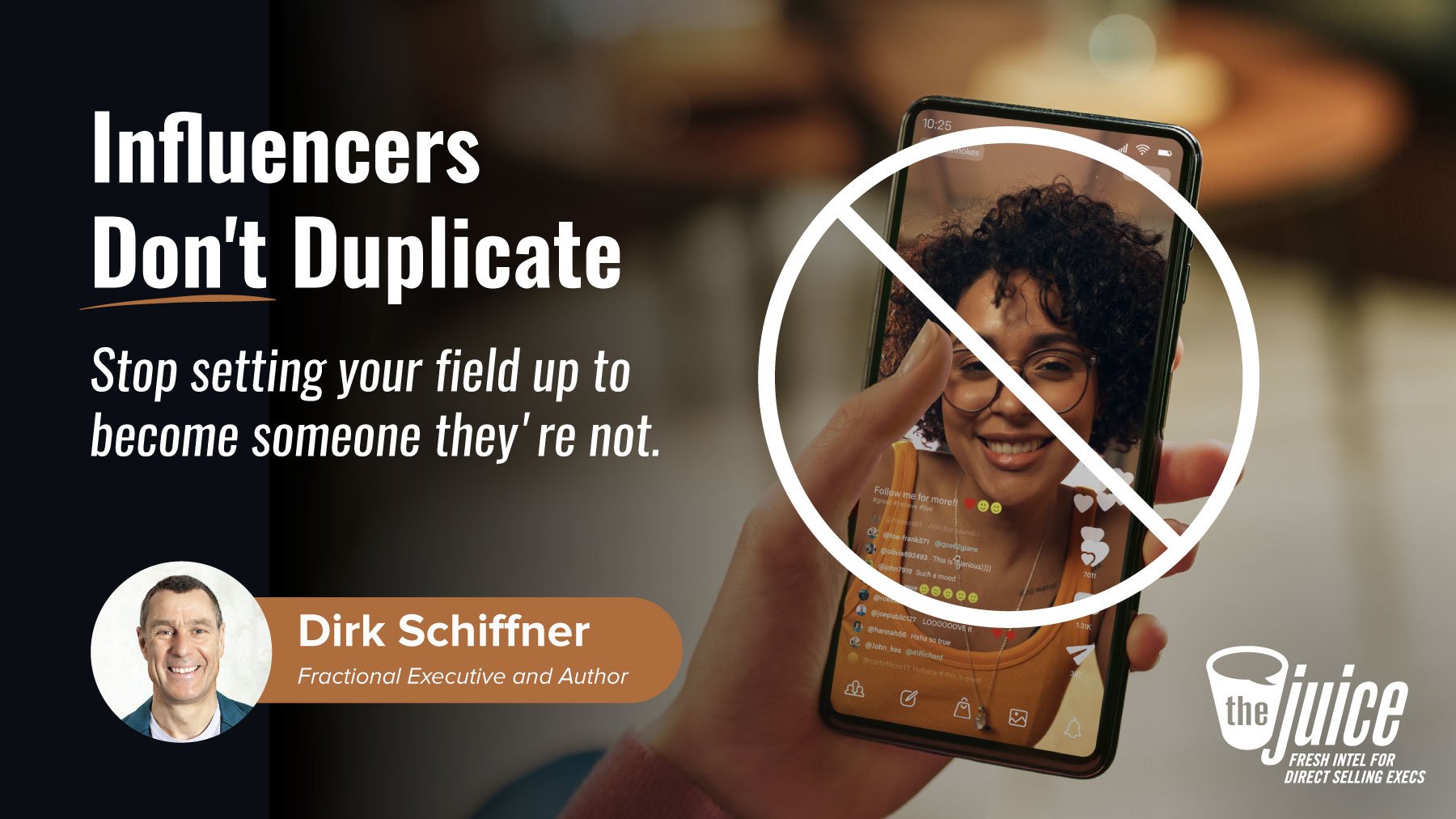
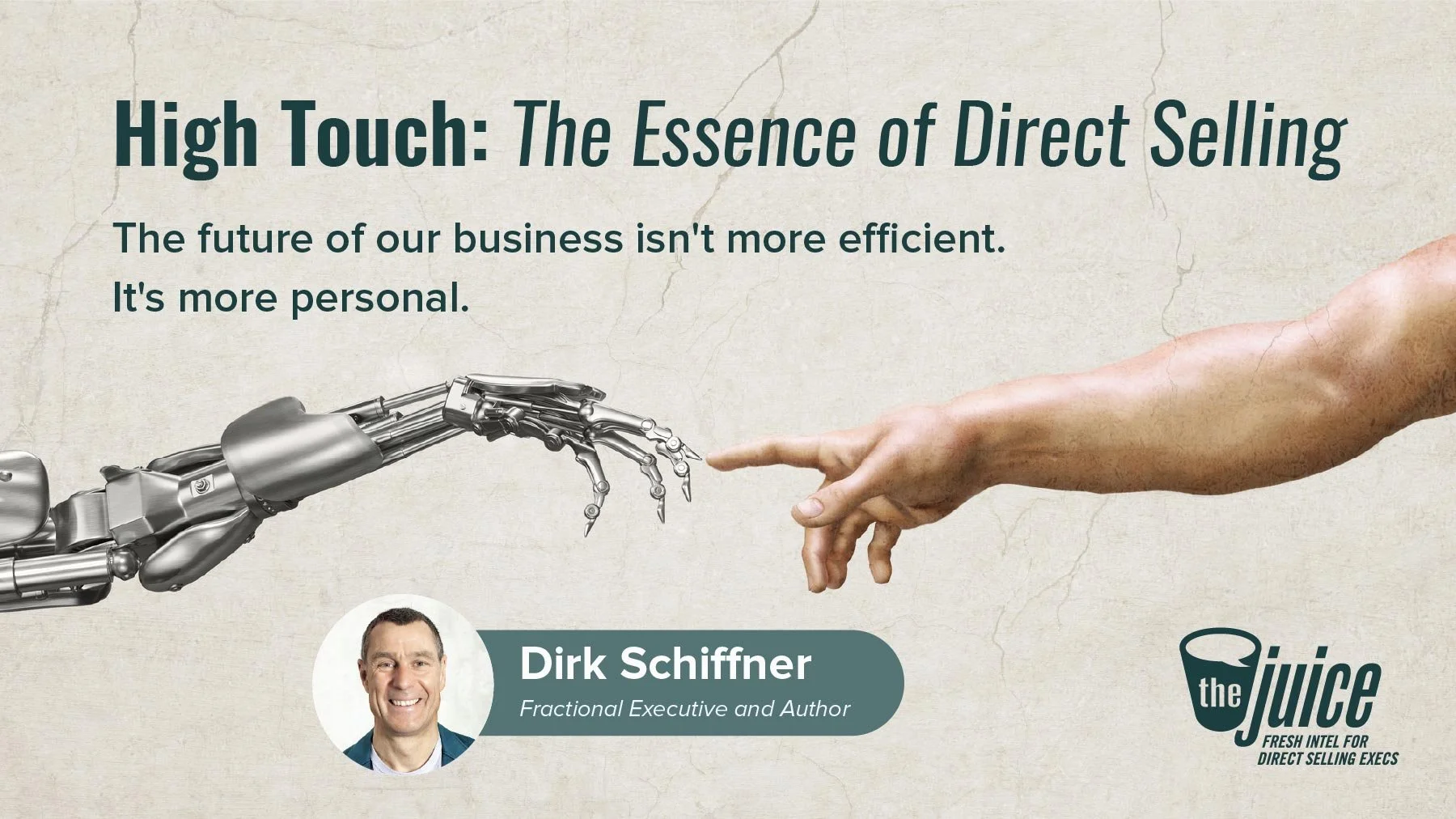
Stop setting your field up to become someone they're not.
Here's a question worth bring up in your next executive meeting: why are so many direct selling companies pushing their field to become influencers, spending their people's energy, and their limited, precious time, chasing something most of them will never be?
Yes. Social media is everywhere, so it feels logical to use the network to build awareness, to get visible, and to get found.
And yes, a few unicorns genuinely crack the code, recruiting thousands into their teams and becoming successful and wealthy that way. But what do they duplicate, actually? Are unicorns even duplicatable? I still wonder about the activation rate, and the longevity, of everyone they attracted.
Found vs. Finding
"Getting found" is advertising. Advertising is what retail stores and brands do to pull customers into their stores. And it's the opposite of what made us direct sellers great.
As Frazer Brookes puts it so well, “there's a world of difference between being found by someone and finding someone.” One is posting and waiting. The other is reaching out and starting a conversation.
Direct selling was built on the second one: “direct.” “Direct” means talking to people “directly.” It's taking your phone and talking to your prospects and customers. Spending hours on Canva, posting stuff and hoping someone slides into your DMs, is just not accepting the pain. The pain of approaching people, of talking to them yourself.
The Math Nobody Wants to Hear
Let's be honest about the influencer dream we keep selling from the stage.
It takes roughly 50,000 followers across platforms to build a six-figure income. It takes an all-in, disciplined advisor posting five times a day, every day, building the technical skill and the system to back it.
99.9% of your field will never get there.
They just don't have the personality to expose themselves all day long with:
"I just got up, taking a coffee and thinking about X."
"Here I am doing my exercise, enhanced by product Y."
"Look at my car, I'm so blessed to have total freedom."
So why do we instigate it? Why pack them off to social media workshops, then wonder why duplication stalls? The answer is uncomfortable: we've confused visibility with connection.
They are not the same thing.
Even Done Right, It's Brutal
Sam Hinds made this painfully clear in her DSU Spring 2026 presentation. For years, our field was taught one playbook: product posts, promotions, company graphics, perfect marketing.
That's the technical, the easy part, and it's exactly what the algorithms now punish. Why? Because platforms hate carrying other people's advertising. They want to sell their own. It's their platform, and we are the "ware."
So what does social media actually reward in 2026? The hard stuff: personality, story, relatable conversation. And that's demanding, even for professionals, even for seasoned pros with years of experience.
So let me ask: how is Pepita Smith, with her honest 20 minutes a day, supposed to crack that? She can't. And we shouldn't pretend she can.
Run the Other Calculation
Just imagine that for every 15 minutes spent on Canva, your field had called a real customer or prospect instead, asking a question, offering help, following up.
Here's the ROI question I'd love every executive to actually sit with.
Imagine your field took the hours they pour into chasing the algorithm and spent them talking to their customers instead. Following up. Delivering products personally. Asking how the last order worked out.
Now calculate that return. It isn't close.
A Word on the Real Influencers
Yes, a handful of genuinely gifted people will break through. Treat them as a windfall. Celebrate them, support them, but don't build your strategy on them. They're the exception, and exceptions don't duplicate.
And another word of caution from reality: the fastest risers are usually the most ambitious and self-assured, and it's in their nature that they will quickly want to teach, launch coaching programs, and sell other stuff across their downlines because it's “their” downline, not “yours.”
That's a natural instinct, to leverage a platform. And even if you set clear boundaries, with elaborate rules and regulations, in most cases you won't beat their ambition. They'll move on anyway.
Your Challenge
Go back to the basics. Start a deep, profound conversation with your executive team about what direct selling really is, its DNA, and the unique characteristics that D2C and retail simply don't have. And stop chasing trends that don't duplicate.
Because influencers don't duplicate. The “direct” approach and conversations do. And in direct selling, it's all about conversations, the ones that lead to relationships.
Other Articles You May Enjoy